

Sleeping Bags
Sleeping bags are ranked here on degrees of temperature rating per kilogram carried. It is the best-documented category we track — and the one where the headline number needs the most explaining, because a temperature rating on a retail listing does not mean what most buyers assume it means.
Pages in This Section
Sleeping Bag Spec Comparison
Every bag we can measure, ranked on temperature rating per kilogram, with the category baseline alongside so you can see where each one sits in the distribution.
What a Temperature Rating Actually Promises
Why a “20°F bag” from two brands is not the same measurement, what comfort and limit ratings mean, and why the standard that would fix this is almost never cited.
Warmth-to-Weight, Explained
How to read degrees per kilogram, when the ratio is genuinely decisive, and the situations where deliberately choosing the heavier bag is correct.
The Ranking Rule
Bags are ordered by degrees of temperature rating per kilogram of bag weight. A bag rated to 20°F weighing 1.5 kg scores better than one rated to 20°F weighing 2.5 kg, because it delivers the same claimed capability for less carried load.
This rule is published so you can disagree with it. It deliberately ignores durability, packed size, zip quality, shell fabric and how a bag actually sleeps — none of which appear in published specifications. It is a measure of claimed efficiency, not of quality.
What the Category Looks Like
Across the bags we can measure, the median temperature rating sits at around 20°F and the median weight at roughly 1.7 kg. That combination is the center of gravity of the market: a three-season bag, synthetic or blended fill, sold to occasional campers rather than to people counting grams.
The spread matters more than the midpoint. Weight in this category runs from well under a kilogram to well over three, and a good deal of that variation is not explained by warmth at all. Two bags claiming the same rating can differ by more than a kilogram, which is the entire reason a ratio is more informative than either figure alone.
Data quality note. Temperature rating is published in a structured specification field on around three-quarters of the bags we track, and in every case we found, it came from that structured field rather than from marketing copy. By the standards of this site that is unusually strong provenance — for comparison, lantern brightness figures come almost entirely from marketing text.
The Problem With the Number We Rank On
Strong provenance is not the same as strong meaning, and this is the most important thing on the page.
A sleeping bag temperature rating can describe several different things. A comfort rating is roughly the temperature at which a cold sleeper remains comfortable. A limit rating is where a warm sleeper is on the edge of it. An extreme or survival rating is where the bag prevents hypothermia while you have a thoroughly unpleasant night. These can differ by twenty degrees or more for the same bag.
There is a standard that separates them — the ISO 23537 test protocol, previously EN 13537 — which specifies how a bag is measured so that ratings can be compared between brands. In the retail listings we examined, not one bag cited it. Every temperature figure we collected is therefore a bare number with no stated basis, and no way to tell which of the three it represents.
The practical consequence: treat a rating as a rough band rather than a threshold, assume it is optimistic unless the brand documents otherwise, and give yourself substantial margin if you sleep cold. A commonly used rule of thumb is to allow around 10°F of headroom against a rating with no stated basis, and more if the number came from a brand you do not recognize.
Fill Type: The Specification That Is Missing
Down or synthetic is the second question most buyers ask, and it is poorly served by retail specification data. Fill material is published inconsistently, and fill power — the loft measurement that separates a good down bag from a mediocre one — is essentially absent from listings altogether.
This is why the comparison page ranks on weight and rating alone rather than adjusting for fill. Where fill type is stated we report it, but we cannot rank on something the category does not publish. In broad terms: down delivers more warmth per gram and loses badly when wet, synthetic is heavier and more forgiving of damp, and the gap between a good and a poor example of either is larger than the gap between the two types.
Where the Ratio Should Not Decide It
Warmth-to-weight is decisive when you are carrying the bag. It matters much less, and sometimes not at all, when you are not.
- Car camping. If the bag travels in a trunk, a kilogram is irrelevant and comfort, width and a bag that survives being stuffed carelessly all matter more.
- Occasional use in mild conditions. Efficiency is a premium you pay for, and paying it for two weekends a year rarely makes sense.
- Cold sleepers. Ratings assume an average sleeper. If you routinely sleep colder than the people around you, buy the warmer bag and accept the weight.
- Wet climates. A lighter down bag that loses its loft in persistent damp is worse than a heavier synthetic one that does not.
Related Categories
A sleeping bag is one component of a sleep system, and its rating assumes the rest of the system is doing its job.
- Sleeping Pads — the insulation underneath you matters as much as the bag above. This is also the one category we cannot rank, and the page explains why.
- Camping Tents — ranked on packed weight per sleeper, the other large component of overnight carried weight.
- Hiking Backpacks — what carries all of it, ranked on liters per kilogram.
Common Questions
Is a lower temperature rating always better?
No. A bag rated far colder than your conditions is heavier, bulkier and more expensive than you need, and can be uncomfortably hot. Match the rating to your realistic worst night, with margin, rather than buying the coldest number available.
How much should I distrust a stated rating?
Enough to leave real margin. With no listing citing a testing standard, a stated rating is an unverified claim measured on an undisclosed basis. Allowing around 10°F of headroom is a reasonable default, and more if you sleep cold.
Why do two bags with the same rating differ so much in weight?
Fill type and quality, shell fabric, cut, and how conservatively the brand rates its bags. Since fill power is almost never published, some of that difference is not visible in the specifications at all — which is exactly why the ratio is useful for shortlisting rather than deciding.
Does the ranking account for down versus synthetic?
No, because the category does not publish fill data consistently enough to support it. A down bag will usually rank better on warmth-to-weight; whether that is the right trade for wet conditions is a judgement the ratio cannot make.
What about bag size and shape?
Mummy bags rank better than rectangular ones on this measure, because less material means less weight and less air to heat. If you sleep restlessly or dislike a close cut, that ranking advantage is not worth much to you.
Compare them
The finder below is already scoped to this class — 60 of the 429 items in the corpus. Widen or narrow it from there, or open the full camp gear finder to search everything at once. Every result is placed against the median for its own size band, where that band holds at least eight products with a stated figure.
60 items match
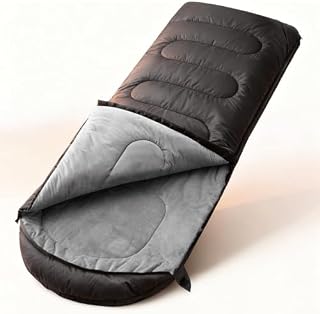
FARLAND Sleeping Bags for Adults Cold Weather, Fleece-Lined | Waterproof Windproof 3-Season Camping, Microplush Interior, Compression Sack, 87×33"
Weight
2.83kg
Sleeping bags · 2.5-5 kg · 8 items
Weight is -5% against the class median of 2.99.

Farland Sleeping Bags for Adults, 3-4 Season, Lightweight, Camping | Camping, Water-resistant,Compression sack, Breathable, Machine washable, for family & teens, travel essential
Weight
1.81kg
Sleeping bags · 1-2.5 kg · 34 items
Weight is +17% against the class median of 1.55.

Lightweight Compact Sleeping Bag for Adults & Kids Camping Backpacking Warm | 3lb, packs 8"x14". Left-zip pairs with Right-zip to make a double. 50–68°F for 3-season. Hooded envelope. Machine washable.
Weight
1.35kg
Sleeping bags · 1-2.5 kg · 34 items
Weight is -13% against the class median of 1.55.

Teton Mammoth Queen Size Double Sleeping Bag- A Warm Bag the Whole Family can Enjoy – Great for Camping, Hunting and Base Camp. Compression Sack Included
Weight
6.35kg
Too few items in this class to publish a baseline.

Coleman Heritage Big & Tall 10°F Flannel Sleeping Bag, XL Sleeping Bag Fits Adults up to 6ft 7in Tall, Machine Washable, Great for Camping, Hunting, Guests, & More
Weight
4.04kg
Sleeping bags · 2.5-5 kg · 8 items
Weight is +35% against the class median of 2.99.
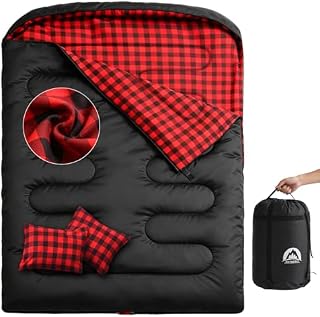
Swtmerry Double Sleeping Bag for Adults with 2 Pillows, Big&Tall XL Queen Size Sleeping Bag for 2 Person, Waterproof 2 Person Sleeping Bags for 3 Seasons,Cold Weather&Warm,Camping,Hiking & Backpacking
Weight
3.20kg
Sleeping bags · 2.5-5 kg · 8 items
Weight is +7% against the class median of 2.99.
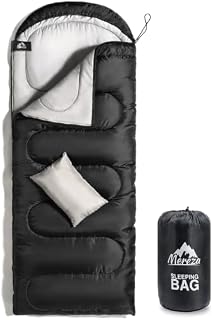
MEREZA 0 Degree Winter Sleeping Bag for Adults Kids with Pillow, Cold Weather Sleeping Bag for 4 Season Camping Hiking Backpacking Sleeping Bags for Big and Tall
Weight
2.99kg
Sleeping bags · 2.5-5 kg · 8 items
Weight is 0% against the class median of 2.99.

MEREZA 0 Degree Winter Sleeping Bag for Adults Kids with Pillow, Cold Weather Sleeping Bag for 4 Season Camping Hiking Backpacking Sleeping Bags for Big and Tall
Weight
2.99kg
Sleeping bags · 2.5-5 kg · 8 items
Weight is 0% against the class median of 2.99.
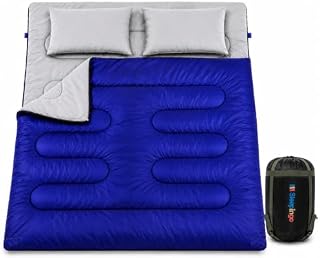
Sleepingo Double Sleeping Bags for Adults Backpacking, Camping, or Hiking – Waterproof Queen Sleeping Bags for Adults or Teens – Truck, Tent, Sleeping Pad
Weight
2.88kg
Sleeping bags · 2.5-5 kg · 8 items
Weight is -4% against the class median of 2.99.
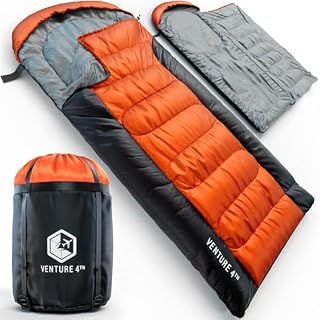
VENTURE 4TH Backpacking Sleeping Bag for Camping – Single, XXL & Double | Water-resistant, breathable polyester. Compresses into included stuff sack for easy carry. Warm & Cold Weather Options.
Weight
2.00kg
Sleeping bags · 1-2.5 kg · 34 items
Weight is +29% against the class median of 1.55.

3-4 Season Sleeping Bag for Adults & Kids, Lightweight Warm Cold Weather Camping Bag with Waterproof Compression Sack – Portable for Hiking, Backpacking, Traveling & Outdoor Adventures
Weight
1.91kg
Sleeping bags · 1-2.5 kg · 34 items
Weight is +23% against the class median of 1.55.

Camping Sleeping Bag, 32℉ Sleeping Bags for Adults Kids Teens Cold Weather Warm Sleeping Bag Winter for 3-4 Season Camping, Camping Gear Equipment, Traveling, and Outdoors
Weight
1.91kg
Sleeping bags · 1-2.5 kg · 34 items
Weight is +23% against the class median of 1.55.