

Backpack Spec Comparison
The hiking backpack category baseline — capacity and empty weight across the packs on sale — plus the size-band caveat that makes a single liters-per-kilogram ranking misleading if you apply it across the whole category.
The Category Baseline
Computed from 60 packs with published specification data.
| Specification | Coverage | P25 | Median | P75 |
|---|---|---|---|---|
| Capacity (liters) | 67% | 18 | 27 | 42.5 |
| Empty weight (kg) | 88% | 0.34 | 0.50 | 0.91 |
The median pack is a 27 liter daypack weighing about 500 g. That is what the market sells, not what a multi-day backpacking trip needs — a point worth holding onto when reading everything below.
Compare Within a Size Band, Not Across
This is the single most important caveat on the page. A frameless 20 liter daypack will beat a 65 liter internal-frame pack on liters per kilogram almost every time, because it carries no frame, no substantial hip belt and no load-transfer structure.
That does not make it the better pack. It makes it a pack for a different load. Above roughly 12–15 kg carried, the structure you are not carrying is the structure you need. Use these bands to compare packs of similar capacity against each other:
| Band | Typical use | What to expect |
|---|---|---|
| 15–30 L | Day hikes | Often frameless; the lightest packs and the best raw ratios |
| 30–50 L | Overnight to weekend | Where a real hip belt starts to matter |
| 50–70 L | Multi-day | Frame and suspension dominate; expect a poorer ratio and want it |
Where the Weight Figures Get Unreliable
Published pack weights include some clearly implausible values — packs recorded at a few grams, and 50 liter packs listed at weights no framed pack achieves. Because a leaderboard sorts for extremes, those bad values would occupy the top of any ranked table, which is why this page publishes quartiles instead of a product ranking. The same reasoning is set out in more detail on the sleeping bag comparison.
Quartiles are unaffected by a handful of bad values in a way that a “top ten lightest packs” list never can be.
One thing this category gets right. Capacity is usually stated in the product name — “50L Hiking Backpack” — rather than in a specification field. That is weaker provenance than a structured field, with a useful side effect: the figure always describes the product being named. Backpacks are effectively free of the size-variant mismatch that affects a quarter of tent capacity figures.
Liters Are Not Standardized
Brands count capacity differently — some include lid, hip-belt and stretch pockets, others only the main compartment. The difference can be five to ten liters on the same pack. Capacity figures are therefore reliable within a brand’s own range and approximate across brands.
Watch also for hydration bladder volumes quoted as capacity. Any hiking pack described in single-digit liters is almost certainly quoting its reservoir.
How to Place a Pack
- Under 0.34 kg empty puts a pack in the lightest quarter — usually frameless and packable.
- Over 0.91 kg empty puts it in the heaviest quarter, which for a 50 L+ pack is entirely appropriate.
- Around 27 L and 0.50 kg is the exact center of the category: a typical daypack.
- A large capacity at a very low weight is either a genuinely ultralight pack or a bad specification. Check the manufacturer’s figure before believing it.
Using This Page
- Day hiking: compare within 15–30 L, where a strong ratio is genuinely what you want.
- Weekend trips: compare within 35–50 L and confirm a real hip belt before optimizing weight.
- Multi-day: treat a poor ratio as expected. Fit and suspension outrank everything here.
- Any pack: torso length beats every number on this page.
The Products These Figures Come From
Of the 60 packs in this category, 35 publish every figure in the baseline above. The 10 shown here are listed by price tier, then alphabetically — this is not a ranking, and a product appearing here means its listing is complete, nothing more. 2 listings are held back for a published figure far outside the category’s own range — a data defect rather than an unusual product.
| Product | Brand | Price Tier | Capacity (L) | Weight (kg) | Key Details |
|---|---|---|---|---|---|
 BECOJADDE 15L Small Hiking Backpack for Men Women Foldable… BECOJADDE 15L Small Hiking Backpack for Men Women Foldable… |
BECOJADDE | <$30 | 15 | 0.31 | Adjustable, Backstraps, Chest Strap · Water Resistant · Polyester |
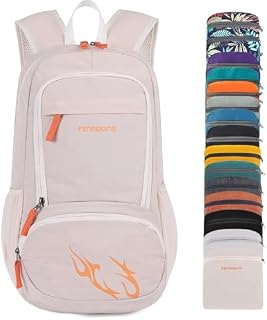 FENGDONG 35L Lightweight Foldable Waterproof Packable… FENGDONG 35L Lightweight Foldable Waterproof Packable… |
FENGDONG | <$30 | 35 | 0.37 | Padded Strap · Waterproof · Nylon |
 G4Free 20L Small Packable Travel Hiking Backpack for Men… G4Free 20L Small Packable Travel Hiking Backpack for Men… |
G4Free | <$30 | 20 | 0.17 | Adjustable · Water Resistant · Nylon |
 MIYCOO Ultralight Packable Backpack MIYCOO Ultralight Packable Backpack |
MIYCOO | <$30 | 35 | 0.36 | Adjustable · Water Resistant · Polyester |
 G4Free 50L Hiking Backpack Waterproof Daypack Outdoor… G4Free 50L Hiking Backpack Waterproof Daypack Outdoor… |
G4Free | $30-75 | 50 | 1.13 | Shoulder Strap · Water Resistant · Polyamide |
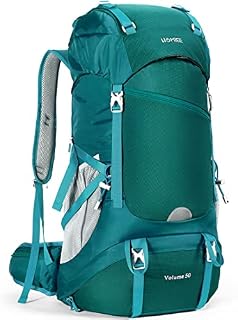 HOMIEE 50L Hiking Backpack Travel Bag Waterproof Camping… HOMIEE 50L Hiking Backpack Travel Bag Waterproof Camping… |
HOMIEE | $30-75 | 50 | 0.45 | Adjustable · Waterproof · Nylon |
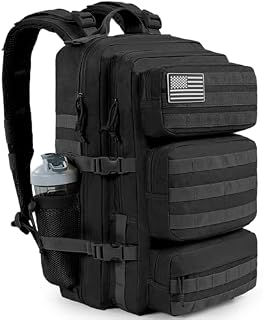 kookoomia 50L Military Tactical Backpack Large Day Backpack… kookoomia 50L Military Tactical Backpack Large Day Backpack… |
kookoomia | $30-75 | 50 | 1.41 | Adjustable · Water Resistant · Polyester |
 The North Face Recon Everyday Laptop Backpack The North Face Recon Everyday Laptop Backpack |
The North Face | $75-200 | 30 | 0.91 | Backpack Straps · Water Resistant · Polyester |
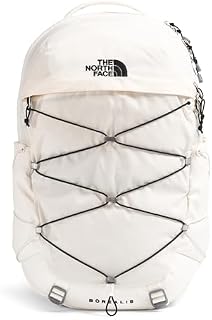 The North Face Women’s Borealis Backpack The North Face Women’s Borealis Backpack |
The North Face | $75-200 | 27 | 0.91 | Adjustable · Water Repellent · Nylon |
 The North Face Women’s Jester Everyday Backpack The North Face Women’s Jester Everyday Backpack |
The North Face | $75-200 | 22 | 0.68 | Adjustable · Water Repellent · Polyester |
Key Details are the listing’s own structured specification rows — strap type, water resistance level, outer material — reproduced as published.
Notes on the Products at the Edges
Most of the products above sit inside the interquartile range on every figure, which is what the baseline already describes. These are the ones it does not: each is outside P25 or P75 on at least one published figure. The position is computed from the category statistics; the explanation is what the listing itself states.
kookoomia 50L Military Tactical Backpack Large Day Backpack… — kookoomia, $30-75
Weight of 1.41 kg sits above the category P75 of 0.91 kg. A tactical pack in water-resistant fabric with double stitching and MOLLE attachment points — construction rather than volume is what makes it heavy for 50L.
G4Free 50L Hiking Backpack Waterproof Daypack Outdoor… — G4Free, $30-75
Weight of 1.13 kg sits above the category P75 of 0.91 kg. Waterproof nylon with a hydration bladder compartment and a mesh back panel, at 50L in a daypack cut.
HOMIEE 50L Hiking Backpack Travel Bag Waterproof Camping… — HOMIEE, $30-75
Capacity of 50 L sits above the category P75 of 43 L. The listing states 50L at 1.8 pounds with a full-contact suspension system — high volume for its weight class.
Specifications are the manufacturer’s published values as scraped for this corpus, not our own measurements — the same source, and the same limits, as the baseline above. Prices move daily, so we show the tier rather than an amount. Links to Amazon are affiliate links.
FAQ
Why is the median capacity only 29 liters?
Because day-hiking and travel packs dominate sales. The baseline describes what is on the market, not what a backpacking trip requires.
Is a lighter pack always better?
Only below about 8 kg carried. Above roughly 15 kg the frame and hip belt that add weight are what make the load bearable.
Why publish quartiles rather than a ranked list?
Because a ranked list sorts for extreme values, and the extreme values in this data include implausible weights. Quartiles are robust to that; leaderboards amplify it.
Can I compare two brands at 50 liters directly?
Only loosely. Capacity is not measured to a standard and brands differ on what they count.